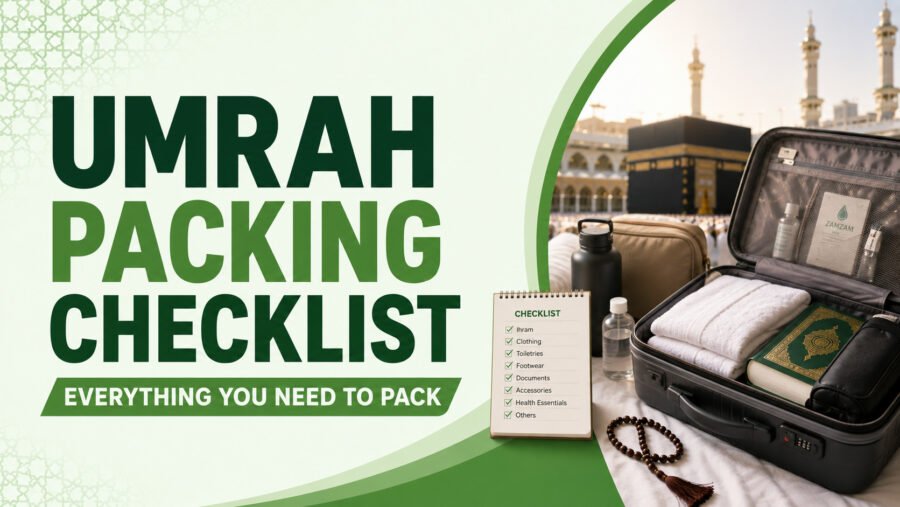
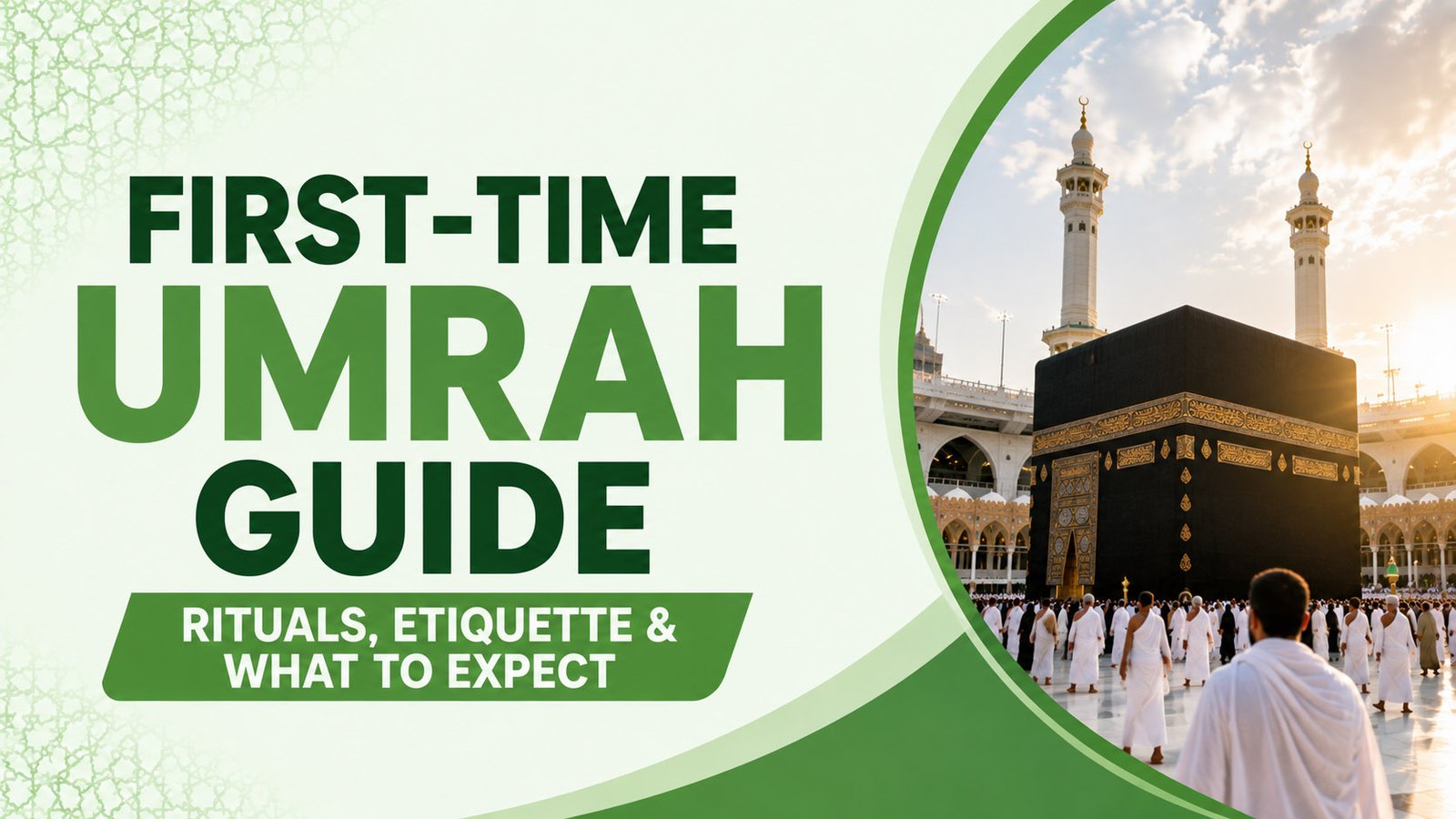
This First-Time Umrah Guide is for every pilgrim who remembers the mix of excitement and nerves beforehand differently. Every pilgrim remembers their first Umrah differently, but almost everyone shares the same mix of excitement and nerves beforehand. Knowing the steps in advance — what happens, in what order, and what’s expected of you — helps you spend less time worrying about logistics and more time present in the moment.
Step 1: Entering the State of Ihram
Before crossing the Miqat (the designated boundary around Makkah), pilgrims enter the state of Ihram. This means performing ghusl (a full bath), wearing the ihram garments, and making the intention (niyyah) for Umrah, followed by reciting the Talbiyah. From this point, certain restrictions apply — no cutting hair or nails, no perfume, and specific behavioural etiquette around modesty and speech.
Step 2: Tawaf — Circling the Kaaba
Upon reaching the Haram, pilgrims perform Tawaf: seven counter-clockwise circuits around the Kaaba, starting and ending at the Black Stone corner (Hajr-e-Aswad). It’s completely normal not to be able to touch or kiss the stone in a crowd — a gesture of acknowledgment from a distance is sufficient. Move at a steady pace, stay aware of those around you, and use the time for dhikr and personal dua.
Step 3: Sa’i — Walking Between Safa and Marwa
After Tawaf, pilgrims perform Sa’i: walking seven times between the hills of Safa and Marwa, commemorating Hazrat Hajar’s search for water for her son Ismail (a.s). The path today is a long, covered, air-conditioned corridor, and there are wheelchair-accessible lanes for those who need them.
Step 4: Halq or Taqsir — Completing Umrah
Umrah concludes with Halq (shaving the head, for men) or Taqsir (trimming a small portion of hair, an option for both men and women). Once this is done, the restrictions of Ihram are lifted, and Umrah is complete.
Etiquette Every Pilgrim Should Know
- Keep your voice low inside the Haram, especially near people praying or making dua
- Be patient in crowds — pushing or rushing during Tawaf is neither necessary nor appropriate
- Dress modestly at all times, even outside the Ihram period
- Be mindful of elderly pilgrims and those with mobility difficulties; give way where you can
First-Time Umrah Guide: Common Mistakes to Avoid
Frequently Asked Questions From First-Time Umrah Guide Readers
This First-Time Umrah Guide wouldn’t be complete without answering the questions pilgrims ask most before their first trip.
Do I need to memorise all the duas before I go? No — this First-Time Umrah Guide recommends carrying a printed or app-based dua booklet instead. Most pilgrims read along rather than memorising everything in advance, and scholars travelling with organised groups are there to guide you through each step.
What visa do Pakistani pilgrims need for Umrah? You’ll need a valid Umrah visa before travel — for official guidance on entry requirements, see the Saudi Ministry of Hajj and Umrah, or let your travel agency handle the application on your behalf.
The most common one is rushing — trying to complete Tawaf and Sa’i as quickly as possible instead of performing them with presence and reflection. Another is under-preparing physically; Umrah involves a lot of walking and standing, so reasonably comfortable footwear and pacing yourself matters more than people expect. Finally, many first-timers forget to simply pause and absorb the moment of first seeing the Kaaba — take that minute for yourself.
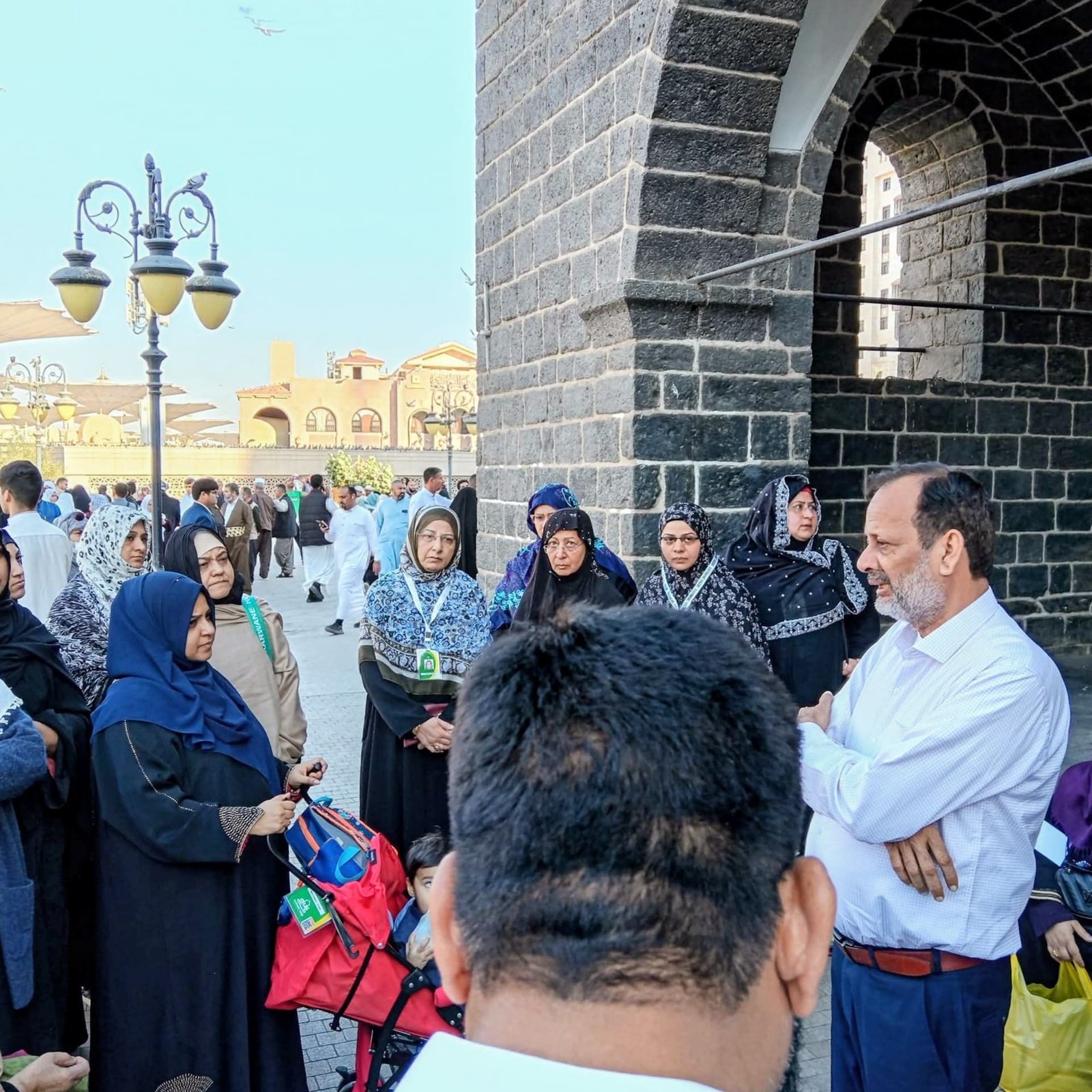
Every group travelling with Karwane Habib is accompanied by an experienced scholar who walks pilgrims through each step in person, so first-timers are never left figuring things out alone. See our packing checklist for a full list of what to bring on your first trip.
Frequently Asked Questions From Our First-Time Umrah Guide
What is the most important tip in a first-time Umrah guide?
Every first-time Umrah guide agrees on one thing: learn the sequence of rituals before you travel. Understanding Ihram, Tawaf, Sa’i, and Halq/Taqsir in advance means you won’t feel lost or rushed once you’re actually performing Umrah.
How long does a first Umrah trip usually take?
Most first-time pilgrims following a first-time Umrah guide spend 10 to 14 days in Saudi Arabia, splitting time between Makkah and Madinah so there’s no need to rush the rituals or the visit to the Prophet’s Mosque (s.a.w).
Is it better to go with a group for a first Umrah?
Yes — nearly every first-time Umrah guide recommends joining an organised group for your first trip. A knowledgeable group leader can walk you through each ritual step by step, which removes most of the stress first-timers feel.
What mistakes should first-timers avoid?
Common mistakes covered in any good first-time Umrah guide include skipping Ihram etiquette, not staying hydrated during Tawaf and Sa’i, and packing too heavy. Following our packing checklist helps you avoid the last one entirely.
Why choose Karwan-e-Habib for your first Umrah?
Karwan-e-Habib has been guiding first-time pilgrims through Umrah for over 35 years. Our first-time Umrah guide approach means experienced group leaders, clear briefings before departure, and full support from visa processing to your return flight.
Quick Reference: First-Time Umrah Guide Checklist
Keep this quick-reference list handy as part of your first-time Umrah guide preparation:
- Learn the Umrah rituals in order: Ihram, Tawaf, Sa’i, Halq or Taqsir
- Pack light, comfortable clothing suited to Ihram requirements
- Carry a small pouch for your passport, Umrah visa printout and cash
- Stay hydrated, especially during Tawaf and Sa’i in warmer months
- Travel with an experienced group leader if this is genuinely your first trip
Following this first-time Umrah guide checklist alongside our detailed sections above should leave you well prepared for a calm, unhurried first Umrah experience.
Planning your first Umrah? See our current Umrah Package from Pakistan with Taif — visa, flights, hotels in Madina and Makkah, and a scholar guiding the group through every ritual.